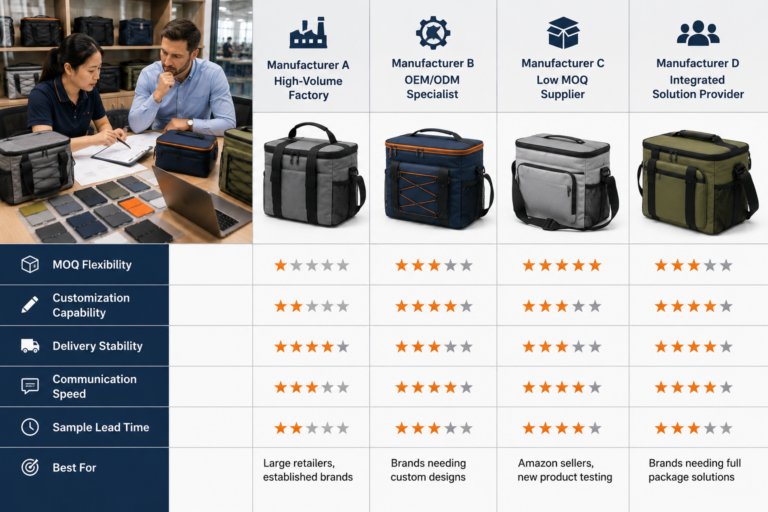

I've worked at our factory for years handling customer inquiries and project coordination. Most buyers who contact us start with the same question: "What's your price?" But the conversations that follow usually reveal a more painful problem—they've already worked with 2-3 factories that quoted low, delivered inconsistent products, stopped responding during production, or couldn't support product testing with flexible orders. They're not looking for the cheapest supplier anymore. They're trying to avoid the hidden costs of working with the wrong manufacturer.
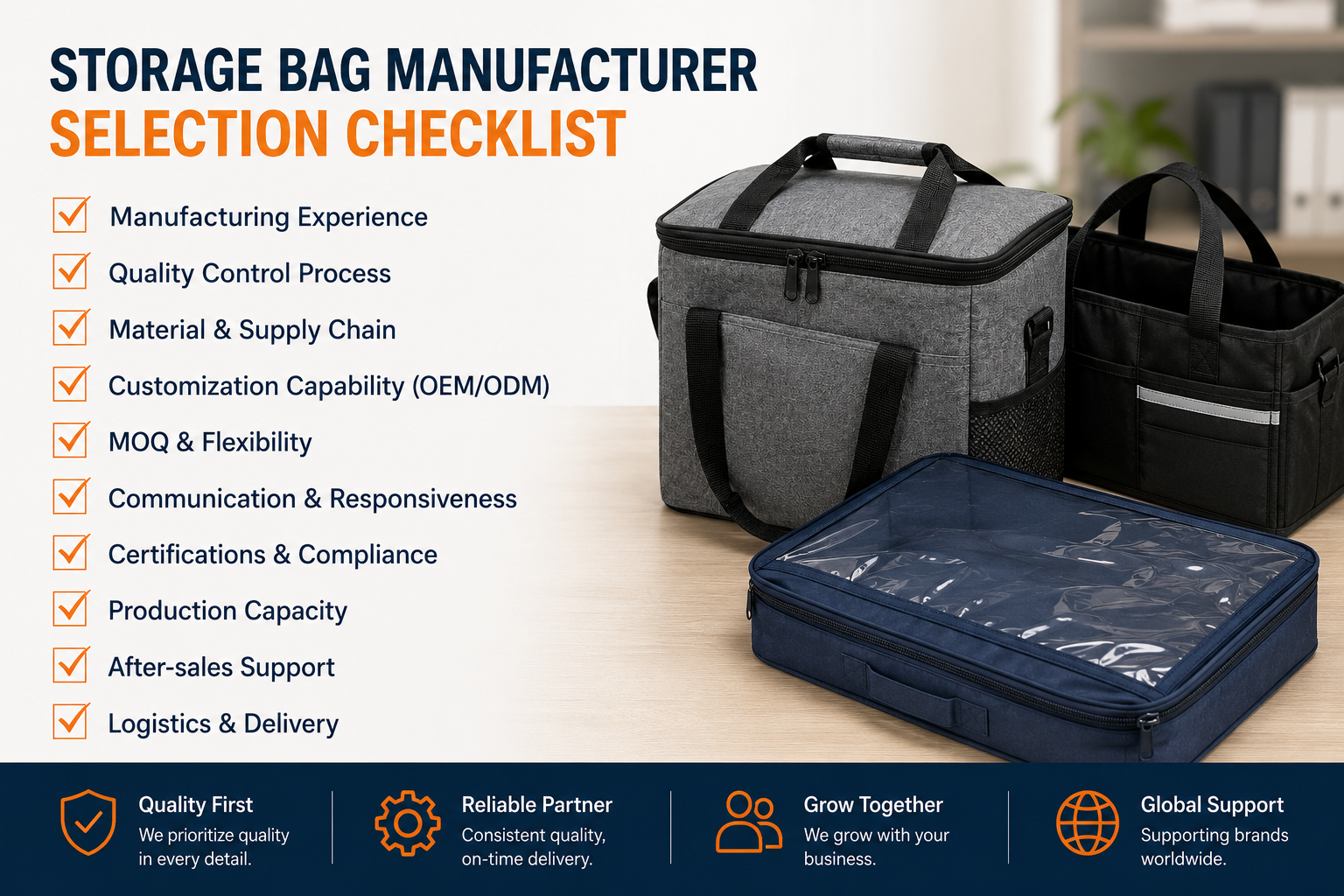
Choosing a storage bag manufacturer isn't about finding the lowest price—it's about identifying which factory can reduce the hidden costs of quality drift, communication gaps, and inflexible production that damage your brand reputation1 and prevent you from scaling your product line.
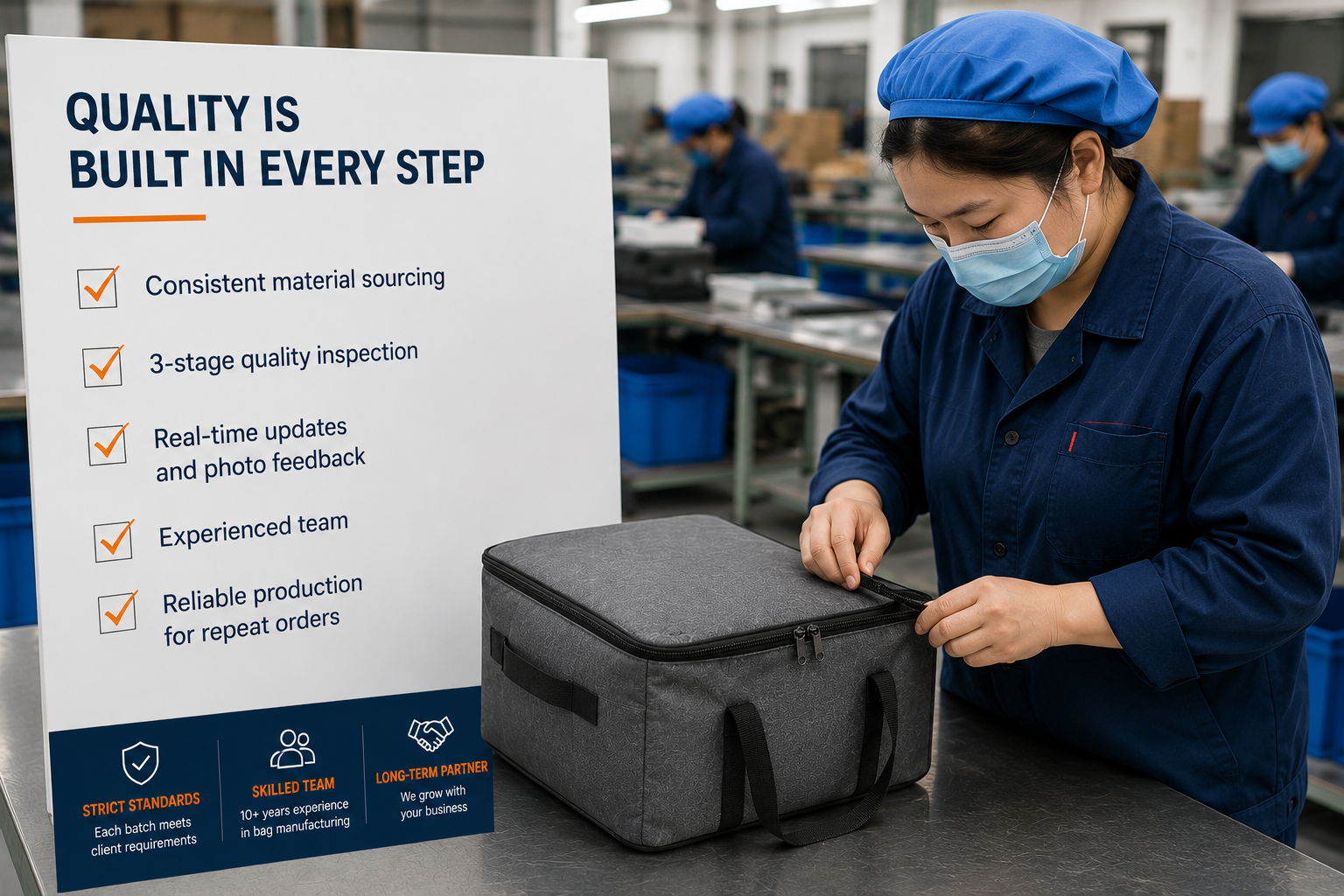
If you've been burned by unreliable suppliers before, you already know that a low quote doesn't predict long-term stability. The real question is whether the factory can support your business long term.
What's the real cost of choosing based on price alone?
Most buyers treat price as the final decision point. I get it—when you're comparing quotes from 10 factories, the lowest number feels like the safest bet. But based on the complaints I've tracked from customers who switched to us, that decision usually creates three downstream costs that nobody accounts for during selection.
Low-price factories often trigger hidden costs: quality inconsistency that forces emergency reorders, communication delays that push back product launches, and rigid MOQ requirements2 that prevent you from testing new designs before committing to large inventory.
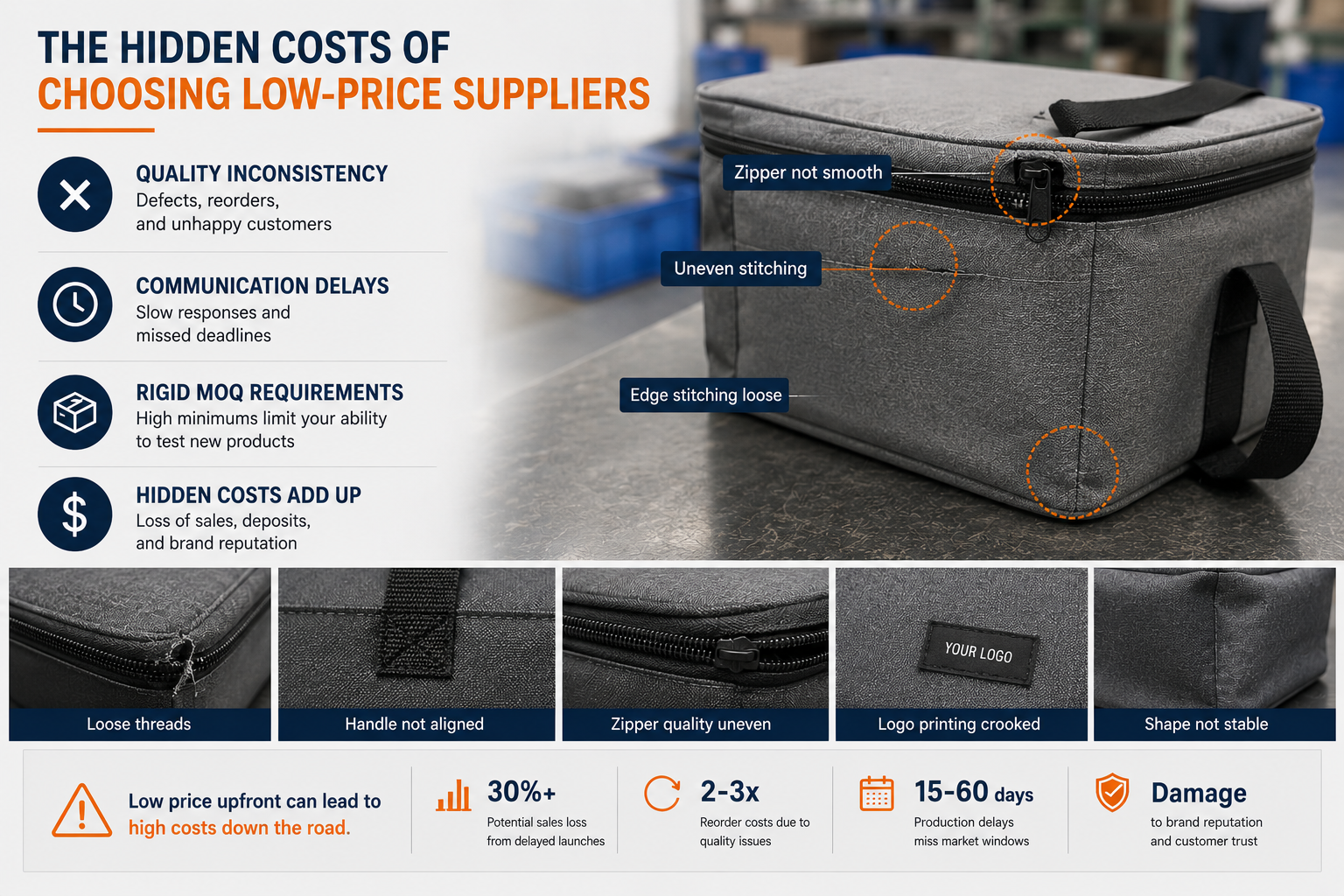
One customer told me they saved $0.50 per unit by choosing a cheaper cooler bag factory. Six months later, they received 3,000 units with broken zippers and had to reorder from us on a 15-day rush timeline—which wiped out the initial savings and delayed their Amazon launch by two months. The lost sales window during peak season cost them more than the price difference across an entire year of orders3.
Another customer selected a factory based on their willingness to accept a 500-unit MOQ for a new car trunk organizer. But when they requested a material change mid-production, the factory stopped responding to emails. By the time they found a new supplier (us), they'd already paid a deposit they couldn't recover and missed their planned retail launch.
Here's what I've learned from tracking these failures: price tells you what you'll pay per unit. Stability tells you what you'll actually spend to get consistent products to market over 12 months. The factories that quote lowest often can't maintain quality past the first order4, can't respond when specifications need adjustment, and can't support flexible production when you're testing new products. That's where the real cost lives.
How do you know a factory can maintain quality beyond the first order?
This is the question I hear most often from buyers who've been burned before. They'll say: "Your samples look good, but how do I know the bulk order will match?" It's a valid concern. I've seen customer complaints where the initial samples were perfect, but production units arrived with thinner fabric, crooked stitching, or weaker zippers.
The best predictor of quality stability isn't the sample itself—it's whether the factory uses consistent material suppliers, maintains documented quality checkpoints, and has experience handling repeat orders5 from brands with strict standards.
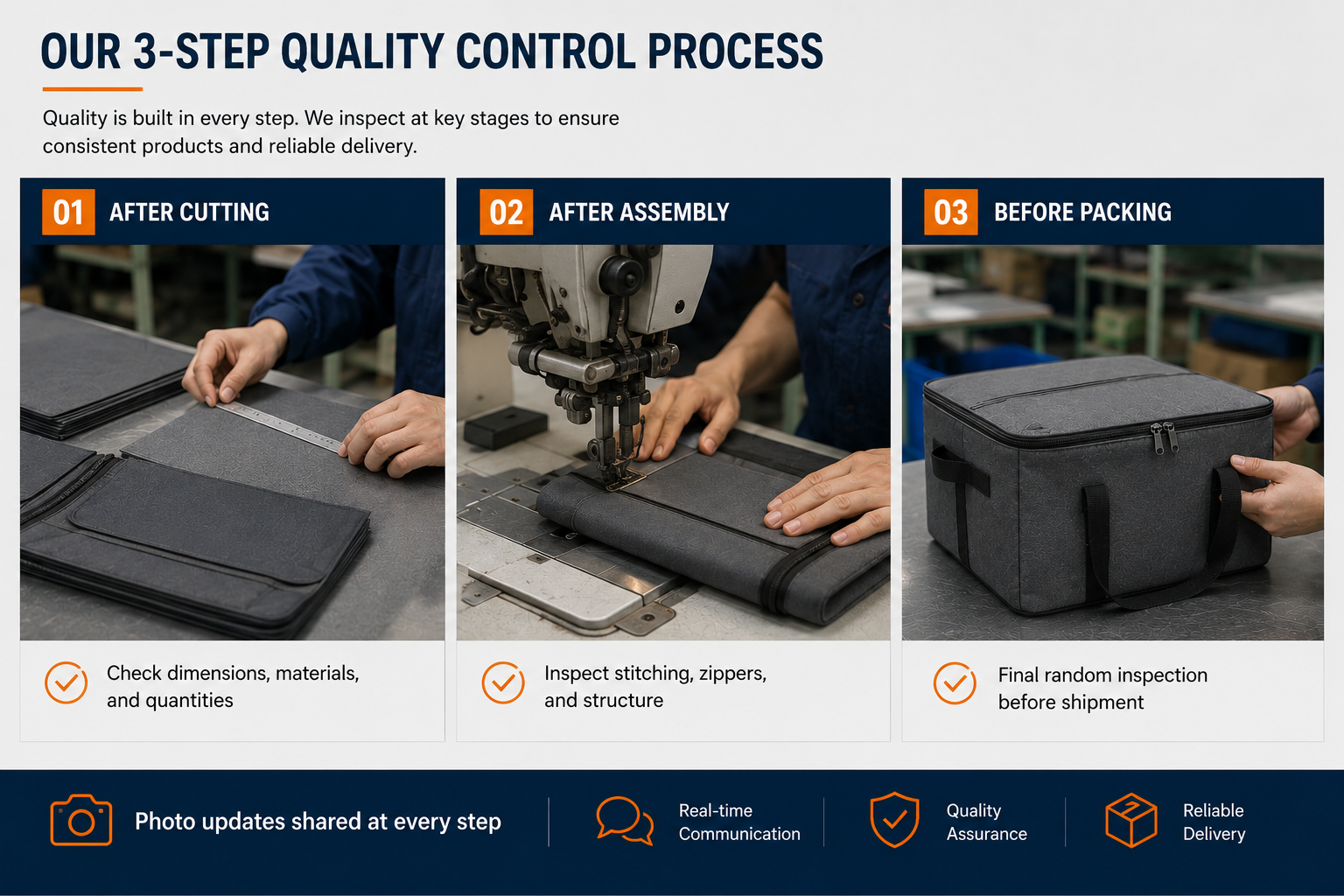
I can't speak for every factory, but here's what we do that customers cite when explaining why they stayed after the first order. We source Oxford fabric, RPET, and insulated materials from the same three local suppliers we've worked with for years. When a customer approves a material sample, we lock in that supplier batch and keep records so future orders match. We don't switch to a cheaper material source mid-production to protect margins.
We also run quality checks at three points: after cutting, after assembly, and before packing. Our production manager photographs random units at each stage and shares them in our project group chat with the customer. That way, if something drifts off specification, we catch it before 3,000 units are finished.
But the real test isn't what we say we do—it's what happens when a customer places their second or third order. One customer told me they chose us because when they reordered their cooler bags six months later, the material thickness, stitching tension, and logo print quality matched their first batch exactly. They'd worked with another factory before where the second order came back with visibly thinner insulation and loose stitching, even though the price stayed the same.
Another customer mentioned that when they requested a slight adjustment to their car organizer's pocket size for the third order, we sent them updated samples before production started. Their previous factory had just made the change without confirmation, and the pockets ended up too small to fit the product they were targeting.
Here's what I suggest when evaluating quality stability: ask the factory how they handle material consistency across repeat orders. Ask if they keep batch records. Ask if they send in-production photos before final inspection. And most importantly, ask for references from customers who've placed at least three orders—because that's where quality drift usually appears6.
What does flexible MOQ actually mean for product testing?
A lot of factories advertise "low MOQ" or "flexible order quantities." But I've learned from customer conversations that what they really mean varies widely. Some factories will say they accept 500 units but only if you're ordering a single SKU with no customization. Others will quote a low MOQ but require you to commit to a full production run before they'll make samples.
Flexible MOQ for product testing means the factory can support small initial orders with customization7, allow you to adjust specifications between orders, and scale up without requiring you to redesign or requalify the product.
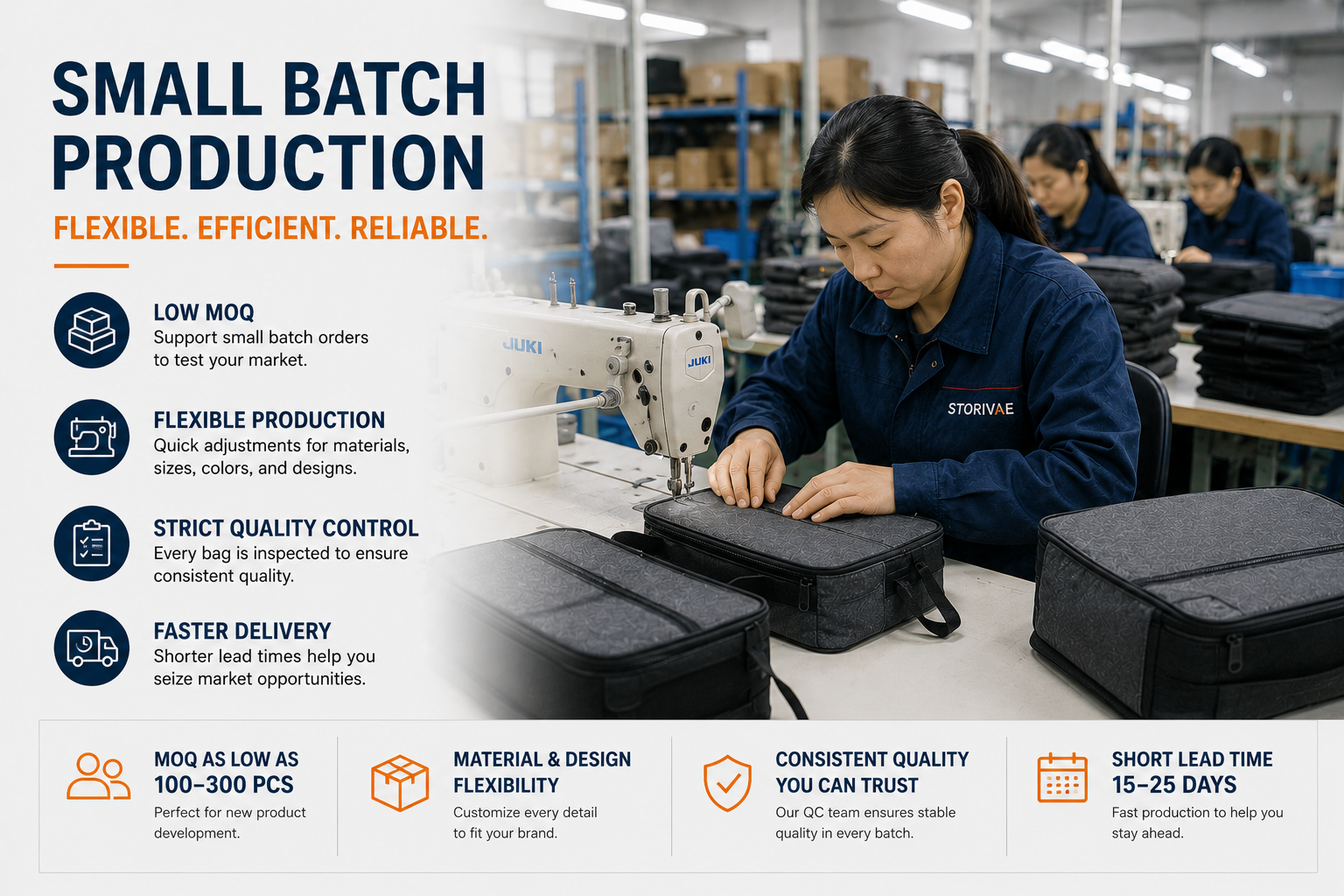
I remember one Amazon seller who wanted to test three different car backseat organizer designs to see which one converted better. They needed 300 units of each design. The first factory they contacted said they could do it—but only if all three designs used the same material, same dimensions, and same pocket layout. That defeated the purpose of testing.
When they came to us, we helped them produce 300 units each with different pocket configurations, material combinations, and attachment systems. The MOQ was higher per design than the first factory quoted, but they were actually able to test variables that mattered for their listing. Two months later, they came back with a 2,000-unit order for the design that won.
Another customer told me their previous factory required them to order 1,000 units minimum, but once production started, they couldn't make any changes. The customer realized mid-production that their Christmas tree storage bag needed a reinforced handle for larger trees, but the factory refused to adjust. They had to sell through 1,000 units with a weak handle before they could place a corrected order with us.
Here's what I've noticed separates truly flexible factories from those that just claim low MOQ: the ability to support iterative product development. That means you can order a small batch, test it with real customers, request adjustments based on feedback, and reorder without starting from scratch.
At our factory, we keep the molds, material specs, and production notes from a customer's first order. When they come back for adjustments—longer straps, different zipper placement, logo repositioning—we don't charge them for new development unless the change is substantial. Some factories treat every new order like a new project, which makes testing expensive and slow.
If you're developing a new product line, ask potential factories these questions: Can I order a small batch with customization? Can I request changes between orders without redoing samples? Will you keep my specifications on file? How much does it cost to adjust a design after the first order? The answers will tell you whether they can actually support product testing or just handle repeat orders of a locked design.
Why does communication speed matter more than people realize?
I used to think communication was a soft factor—something that mattered but wasn't as critical as price or quality. Then I started tracking how often projects stalled because of communication gaps. Now I see it as one of the top three reasons customers switch suppliers.
Fast, clear communication isn't just convenient—it directly affects your product launch timeline, your ability to solve problems mid-production, and your confidence that the factory understands your specifications correctly.
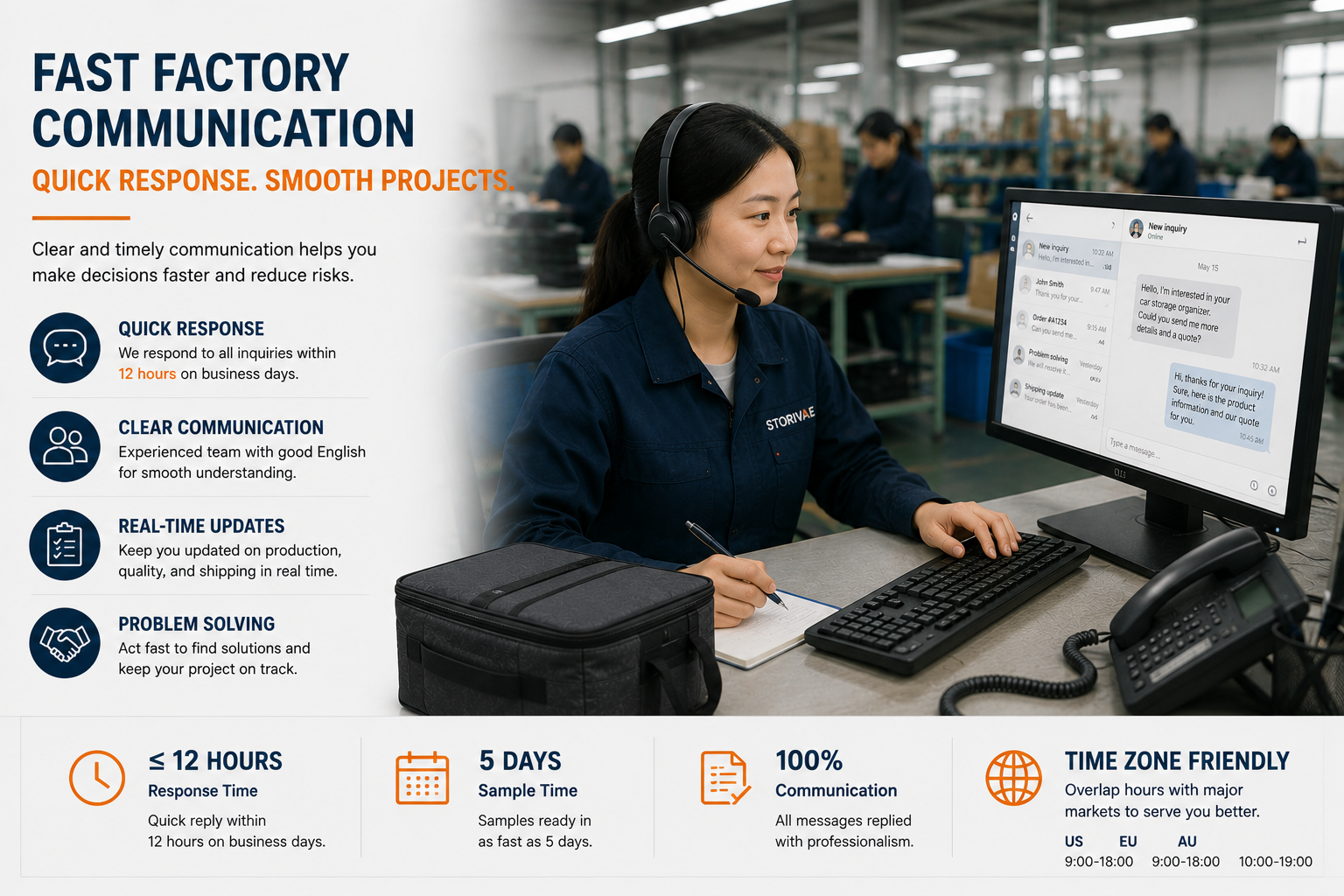
Here's a pattern I see constantly: a buyer sends a specification question to a factory. The factory takes three days to respond. The response doesn't fully answer the question, so the buyer clarifies. Another two days pass. By the time the specification is confirmed, the buyer has lost a week. If they're launching on Amazon during Q4, that week matters.
One customer told me they switched to us specifically because of response time. They were developing a car trunk organizer and needed to know whether we could add a velcro attachment system mid-production. I checked with our production manager, sent them photos of how we'd done it for another customer, and confirmed the lead time adjustment within four hours. Their previous factory took five days to respond and never sent visual confirmation.
Another customer mentioned that when they received a bulk order with a minor stitching issue, they emailed their previous factory with photos. The factory took two days to respond, then asked for more photos. Then they asked the customer to send a physical sample back to China for inspection. By the time the factory confirmed it was their error, the customer's return window on Amazon was nearly closed. When they worked with us on their next project, we handled a similar issue by reviewing photos immediately and sending replacement units within a week.
Here's what I've learned: communication speed matters most during three critical phases. First, during specification confirmation—because misunderstandings here create expensive problems later. Second, during production—because issues caught early can be fixed without scrapping units. Third, during post-delivery—because if a problem occurs, fast resolution saves your brand reputation.
I'm not saying every factory needs to respond within hours. But I am saying that if a factory consistently takes 2-3 days to answer basic questions during the quoting phase, that pattern will continue (or get worse) once you're in production. And if you're launching a seasonal product or running Amazon PPC campaigns with a planned launch date, communication delays directly cut into your sales window8.
When evaluating a factory, track their response time during the quoting process. Ask how they handle mid-production questions. Ask if they use messaging apps like WhatsApp or WeChat for faster communication than email. Ask if they assign a dedicated project contact. And ask for references from customers who've worked with them during urgent timelines—because that's when communication quality shows up most clearly.
| Communication Factor | Why It Matters | What to Test |
|---|---|---|
| Initial response time | Predicts how they'll handle urgent questions | Track days to first reply during quoting |
| Specification clarity | Prevents costly misunderstandings | Ask technical questions and see if answers are complete |
| In-production updates | Catches issues before they become unfixable | Ask how often they send progress photos |
| Problem resolution speed | Determines whether issues damage your brand | Ask how they've handled defects for past customers |
How do you verify a factory's experience with Amazon and retail requirements?
A lot of buyers tell me their previous factory "had experience with Amazon sellers" but then shipped products that violated Amazon's packaging requirements, didn't include required labels, or arrived in non-retail-ready condition9. The factory technically delivered the product, but the buyer had to repackage everything before sending it to FBA—which added unexpected labor and cost.
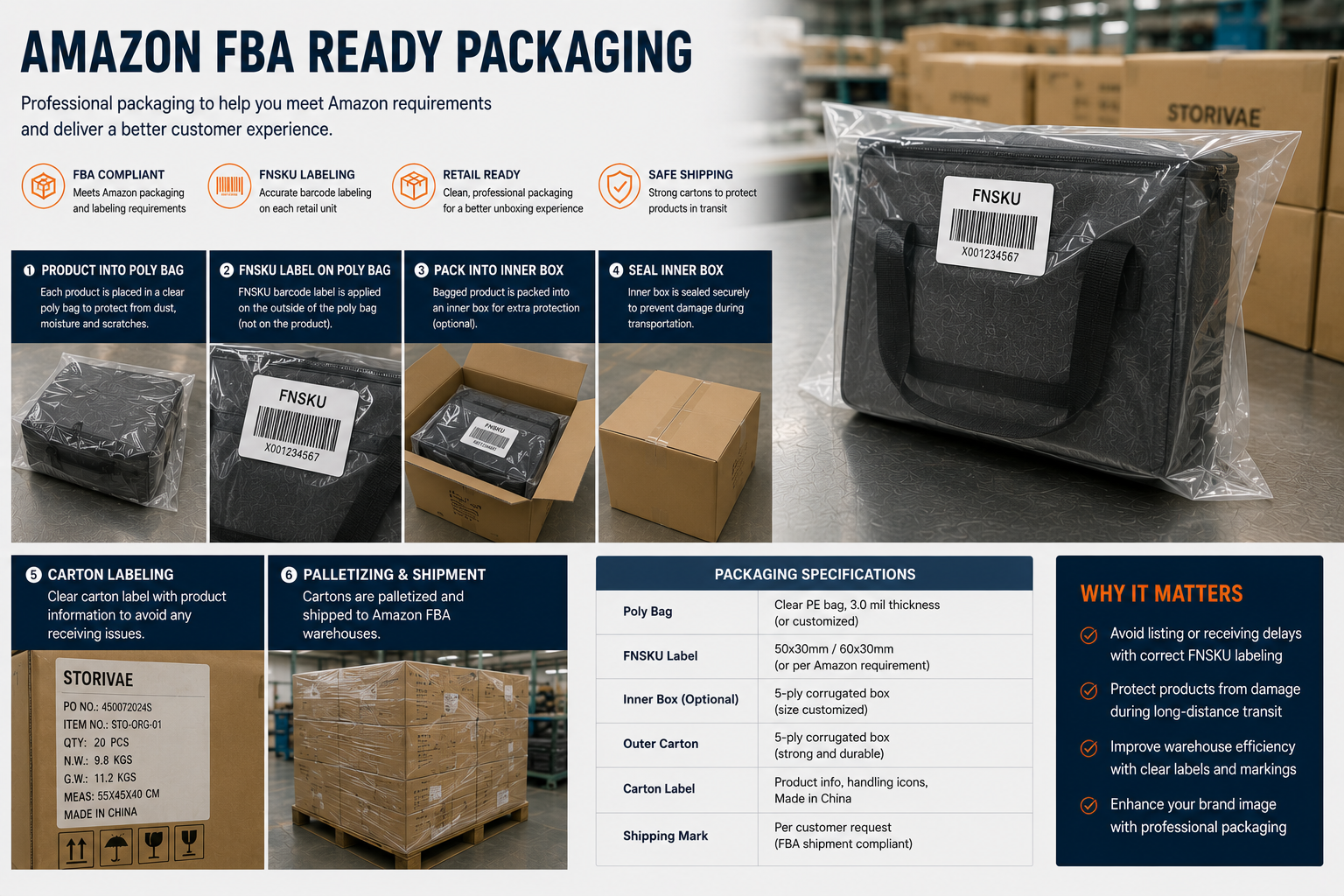
Real experience with Amazon and retail requirements means the factory understands packaging restrictions, labeling standards, carton markings, and how to prepare products for direct FBA shipment without customer intervention.
I remember one customer who ordered Christmas tree storage bags from another factory. The factory shipped them in plain brown cartons with no product information on the outside. When the shipment arrived at Amazon's warehouse, it was rejected because the cartons didn't have scannable labels or dimension markings. The customer had to reroute the shipment to a prep center, repack everything, and pay for re-delivery. The delay cost them their planned November launch.
When they placed their next order with us, we included Amazon-compliant carton labels, FNSKU stickers on each unit, and dimension markings on the master cartons—all standard for us because we've done it hundreds of times. The shipment went straight to FBA with no rejections.
Another customer told me their previous factory included poly bag packaging that didn't meet Amazon's suffocation warning requirements. Amazon held the inventory and required the customer to either apply compliant bags or remove the poly bags entirely. That created a two-week delay and additional prep fees.
Here's what I've learned from handling these situations: the difference between a factory that "works with Amazon sellers" and one that truly understands FBA requirements shows up in the details. Do they know that poly bags over a certain size need suffocation warnings10? Do they know how to apply FNSKU labels correctly? Do they understand that Amazon's warehouses require specific carton markings for easy scanning?
At our factory, we keep a checklist of Amazon requirements and walk through it with every customer during the order confirmation stage. We ask whether they need FNSKU labels applied. We confirm poly bag specifications. We check whether they need retail-ready packaging or plain packaging. We've shipped enough orders to Amazon warehouses that we know what gets rejected and how to avoid it.
But even beyond Amazon, retail customers have different requirements. One customer needed their car organizers to arrive with hang tags, UPC labels, and individual retail boxes. Another customer needed their cooler bags packaged in display-ready shipper boxes for Costco. A third customer needed us to dropship directly to their 3PL warehouse with advance shipping notices.
If you're selling through Amazon or retail channels, ask potential factories these questions: Have you shipped directly to Amazon FBA before? Can you apply FNSKU labels and suffocation warnings? Do you understand Amazon's carton labeling requirements? Can you provide retail-ready packaging with UPC labels and hang tags? Can you handle dropshipping with ASNs?
Better yet, ask for examples. Request photos of how they've packaged products for other Amazon sellers. Ask if they can show you a carton label format they've used successfully. Ask for references from customers who've shipped to FBA without rejections. The factories with real experience will have specific examples—not just general claims.
What red flags indicate a factory can't support long-term partnerships?
I've talked to enough customers switching suppliers that I can spot certain warning signs early. These aren't always obvious during the quoting phase, but they predict whether the factory will be able to support your business past the first order.
Warning signs that predict supplier instability: refusal to provide references, reluctance to discuss past project challenges, inability to explain quality control processes11, and pressure to place large orders before samples are approved.
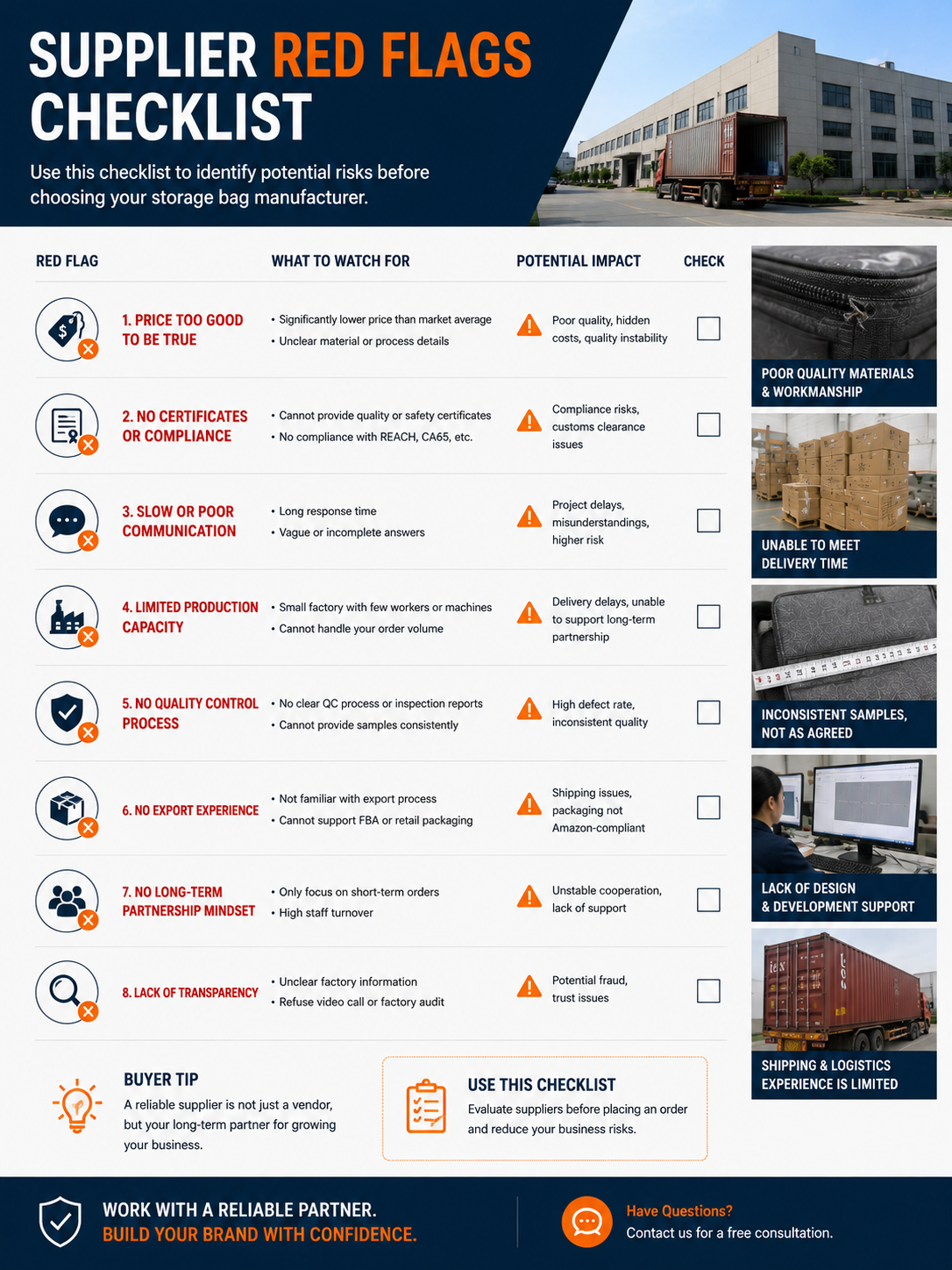
Here's one pattern I see repeatedly: a factory quotes an unusually low price and pushes hard for a large initial order. When the buyer asks to start with a smaller test order, the factory suddenly becomes less responsive or claims the low price only applies to orders above 2,000 units. That's a signal that the factory is optimizing for one-time transactions, not long-term partnerships.
One customer told me their previous factory refused to provide any customer references. When pressed, the factory said their clients valued confidentiality. That might sound reasonable, but most stable factories can connect you with at least one customer willing to share their experience—especially if you're asking about product quality and communication, not proprietary designs.
Another red flag I've seen: factories that can't explain what went wrong on past projects. I'm not saying every factory is perfect—we've had issues too. But when a buyer asks me about challenges we've faced, I can point to specific examples: a shipment delayed by a supplier material shortage, a customization that required three sample iterations, a quality issue we caught during inspection and corrected before shipping. If a factory claims they've never had problems, that tells me they either haven't done enough projects to encounter challenges, or they're not being honest.
I also pay attention to how factories handle specification questions during quoting. If a buyer asks for a specific material or customization and the factory just says "no problem" without asking follow-up questions or showing examples, that's a warning sign. Real manufacturing involves tradeoffs, constraints, and technical considerations12. A factory that doesn't probe deeper probably hasn't thought through how they'll actually produce what you're asking for.
Here's another pattern: factories that promise extremely short lead times without understanding your specifications. One customer told me a factory claimed they could deliver 3,000 custom car organizers in 15 days. When the customer sent detailed specifications, the factory went silent for three days, then came back with a 35-day timeline. The initial promise was just a tactic to win the inquiry.
I've also noticed that unstable factories often avoid discussing their material sources, refuse to share in-production photos, or push back when buyers request inspection before shipping. These are all signals that the factory doesn't want transparency—which usually means they're cutting corners somewhere.
When evaluating a factory, watch for these behaviors: reluctance to provide verifiable references, inability to discuss past challenges, vague answers about quality control processes, pressure to commit to large orders before testing, unrealistic lead time promises, and resistance to transparency during production. Any one of these
"Consumers blame both manufacturer and retailer when products fail ...", https://mendoza.nd.edu/news/consumers-blame-when-products-fail/. Research on supply chain management indicates that product quality inconsistencies and delivery failures can erode consumer trust and brand equity, though the magnitude of impact varies by industry and customer segment. Evidence role: general_support; source type: paper. Supports: that supplier quality and reliability issues can negatively affect brand perception. Scope note: Studies typically examine broader supply chain failures rather than specifically isolating quality drift and communication gaps in manufacturing relationships. ↩
"Assessing the Best Supplier Selection Criteria in Supply Chain ...", https://pmc.ncbi.nlm.nih.gov/articles/PMC9102987/. Procurement research demonstrates that lowest-price supplier selection often results in higher total costs when accounting for quality failures, delivery delays, and transaction complexity, though specific cost multipliers depend on product category and supply chain structure. Evidence role: general_support; source type: paper. Supports: that total cost of ownership in supplier selection extends beyond unit price to include quality, delivery, and flexibility factors. Scope note: Academic studies focus on general procurement principles rather than specifically quantifying costs in the storage bag or light manufacturing sector. ↩
"Quarterly Retail E-Commerce Sales Report - Census Bureau", https://www.census.gov/retail/ecommerce.html. E-commerce research shows that product availability during high-traffic seasonal periods (such as Q4 holiday shopping) can account for disproportionate annual revenue, with some categories generating 30-40% of yearly sales in concentrated windows, making launch delays during these periods particularly costly. Evidence role: general_support; source type: research. Supports: that timing of product availability during peak retail periods significantly affects sales performance. Scope note: Revenue concentration varies significantly by product category, marketplace, and competitive positioning, so the cost of delay cannot be generalized across all storage bag products. ↩
"[PDF] EFFECTIVE METHODOLOGIES FOR SUPPLIER SELECTION AND ...", https://etda.libraries.psu.edu/files/final_submissions/419. Procurement literature documents a general relationship between extremely low pricing and quality risk, as suppliers may achieve low quotes through material substitution, process shortcuts, or unsustainable cost structures that lead to inconsistent performance, though this relationship is not deterministic and varies by supplier capability and market conditions. Evidence role: general_support; source type: paper. Supports: that price-focused supplier selection can correlate with quality and reliability challenges. Scope note: Research addresses general procurement principles rather than specifically documenting quality degradation patterns among lowest-price suppliers in the storage bag or light manufacturing sector. ↩
"The Fundamentals of Supplier Quality Management (SQM)", https://www.kodiakhub.com/blog/supplier-quality-management. International quality management standards such as ISO 9001 emphasize documented procedures, material traceability, and process control as foundational elements for consistent product quality, though certification alone does not guarantee performance. Evidence role: general_support; source type: institution. Supports: that documented quality control processes and material traceability are recognized elements of manufacturing quality management. Scope note: These standards describe quality management frameworks rather than empirically proving that these specific factors predict quality stability in non-certified small manufacturers. ↩
"Building Geopolitically Resilient Supply Chains | Quality Magazine", https://www.qualitymag.com/articles/99440-supplier-management-through-quality-40-building-geopolitically-resilient-supply-chains. Supply chain management literature identifies several mechanisms for quality degradation in ongoing supplier relationships, including material substitution to protect margins, process shortcuts as familiarity increases, and reduced oversight after initial approval, though the timeline and prevalence vary by industry and relationship structure. Evidence role: mechanism; source type: paper. Supports: that quality can deteriorate in supplier relationships over time due to various factors. Scope note: Research examines general supplier relationship dynamics rather than specifically documenting quality drift patterns in small-batch manufacturing or storage bag production. ↩
"[PDF] Raw Material Minimum Order Quantity Optimization - DSpace@MIT", https://dspace.mit.edu/bitstream/handle/1721.1/121302/1240293813-MIT.pdf?sequence=1. Research on new product development indicates that lower MOQ requirements from suppliers can reduce financial risk and enable iterative testing approaches, particularly for small businesses and e-commerce sellers exploring new product variations, though the optimal order size depends on product economics and market uncertainty. Evidence role: general_support; source type: paper. Supports: that lower minimum order quantities can facilitate product experimentation and market testing. Scope note: Studies address general principles of product development flexibility rather than establishing specific MOQ thresholds that constitute meaningful flexibility in the storage bag category. ↩
"[PDF] A Pursuit of Responsive Supply Chains by James J", https://www.utoledo.edu/business/PHD/PHDDocs/Roh_JJ_-_From_responsive_strat.pdf. Supply chain research identifies supplier responsiveness and communication clarity as factors influencing time-to-market, with studies showing that specification misunderstandings and delayed feedback loops can extend development cycles, though the magnitude of delay depends on product complexity and relationship maturity. Evidence role: general_support; source type: paper. Supports: that supplier communication quality affects product development timelines. Scope note: Research examines communication in complex product development contexts rather than specifically measuring communication delay impacts in straightforward manufacturing scenarios like storage bags. ↩
"Product packaging requirements - Amazon Seller Central", https://sellercentral.amazon.com/help/hub/reference/external/G200141500?locale=en-US. Amazon's Fulfillment by Amazon (FBA) program requires sellers to follow detailed packaging and prep requirements, including proper labeling with FNSKU barcodes, suffocation warnings on poly bags exceeding specified dimensions, and carton labeling standards to facilitate warehouse processing, with non-compliant shipments subject to rejection or additional prep fees. Evidence role: definition; source type: other. Supports: that Amazon maintains specific packaging, labeling, and prep requirements for FBA inventory. ↩
"Bagging requirements", https://sellercentral.amazon.com/help/hub/reference/external/G201685210?locale=en-US. Amazon's FBA packaging guidelines require suffocation warnings on poly bags with an opening of 5 inches or greater, reflecting safety standards intended to prevent hazards, particularly for products that may be accessible to children. Evidence role: definition; source type: other. Supports: that Amazon requires suffocation warnings on poly bags meeting certain size criteria. ↩
"Managing Relationships with Suppliers and Vendors You Use", https://www.apu.apus.edu/area-of-study/business-and-management/resources/managing-relationships-with-suppliers-and-vendors-you-use/. Procurement research suggests that supplier transparency, including willingness to provide references and discuss quality management processes, correlates with relationship stability and performance, as these behaviors indicate confidence in capabilities and commitment to accountability, though no single factor definitively predicts long-term partnership success. Evidence role: general_support; source type: paper. Supports: that transparency and willingness to discuss processes are associated with supplier reliability. Scope note: Studies examine supplier evaluation frameworks in general rather than empirically validating these specific behaviors as predictive indicators in small manufacturing contexts. ↩
"Design tool reveals a product's many possible performance tradeoffs", https://news.mit.edu/2018/interactive-design-tool-product-performance-tradeoffs-0815. Manufacturing engineering principles recognize that production decisions involve tradeoffs among competing objectives—such as material cost versus durability, production speed versus quality control, and design complexity versus manufacturability—requiring suppliers to balance multiple constraints rather than simply accepting all customer specifications without consideration. Evidence role: general_support; source type: education. Supports: that manufacturing processes involve inherent tradeoffs between factors such as cost, quality, speed, and design complexity. ↩