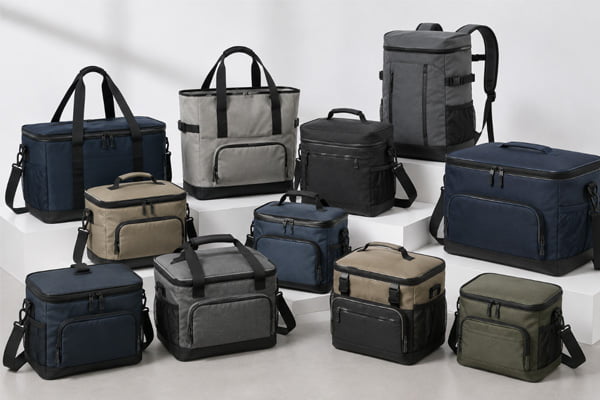
When sourcing custom insulated cooler bags, choosing the right manufacturer is critical for ensuring consistent product quality and seamless delivery. Many B2B buyers struggle with unreliable suppliers, poor communication, or limited customization capabilities.1 This guide outlines how to evaluate potential partners and make informed choices for successful collaborations.
To choose a custom insulated cooler bag manufacturer, buyers should verify manufacturing capabilities, evaluate materials and stitching quality, assess customization options, check MOQ terms, confirm certifications, and ensure clear communication. This ensures reliable supply and tailored products that meet your brand’s needs.
Finding the right supplier requires both technical expertise and practical considerations. Below, I’ll walk you through key factors that professional buyers prioritize.
On This Page
- What should B2B buyers look for in a cooler bag manufacturer?
- How do you evaluate a supplier’s manufacturing capabilities?
- What materials and insulation options should you compare?
- What customization options should a reliable manufacturer offer?
- What is a reasonable MOQ for custom insulated cooler bags?
- How do you verify quality control and factory certifications?
- What affects custom cooler bag pricing?
- What should you confirm before requesting a sample or quotation?
- Frequently Asked Questions
- Conclusion
What should B2B buyers look for in a cooler bag manufacturer?
For B2B buyers sourcing custom insulated cooler bags, reliability, product quality, and competitive pricing are top priorities. Choosing the wrong supplier can lead to delayed shipments, inconsistent manufacturing, or missed opportunities in your market.
The ideal cooler bag manufacturer offers stable production capabilities, rigorous quality standards, efficient communication, and long-term partnership potential for OEM/ODM projects.2
Reliable manufacturers differentiate themselves with proven reputations, transparent processes, and the ability to scale production while maintaining quality.3 Vetting these aspects early avoids costly mistakes down the line.
Key Qualities of a Reliable Manufacturer:
- Factory experience in insulated bags manufacturing.
- Consistent quality control processes and certifications.
- Clear timelines for sampling, production, and delivery.
- Flexible MOQ terms for different scales of operation.4
- Strong OEM/ODM customization support, including branding.
How do you evaluate a supplier’s manufacturing capabilities?
The production capabilities of a cooler bag supplier determine whether they can meet your brand’s requirements on time and at scale. Without a robust factory setup, even the best-designed cooler bag may fail in execution.
Evaluate manufacturing capabilities by reviewing factory size, machinery, worker expertise, production lead times, and past customer references.5

Step-by-Step Evaluation Checklist:
- Factory size and production capacity: The factory should handle your desired order volumes efficiently.
- Machinery and techniques: Advanced sewing machines and ultrasonic welding for insulation layers indicate technical capability.
- Worker expertise: Assess sewing and fabrication skills6. Check the sample’s stitching and dimensions against your agreed specifications.
- Material sourcing partnerships: Reliable suppliers often have access to durable Oxford/polyester fabrics and insulating foam.
- Lead time management: Verify whether they can meet deadlines during peak seasons.
What materials and insulation options should you compare?
The performance of insulated cooler bags heavily depends on the selected materials and insulation technologies. Choosing the right combination ensures durability, temperature retention, and user satisfaction.
Ideal materials for cooler bags include heavy-duty polyester or Oxford fabric, aluminum foil lining, and efficient PE foam insulation.7 Consider water-resistance, thickness, and stitching quality when comparing options.
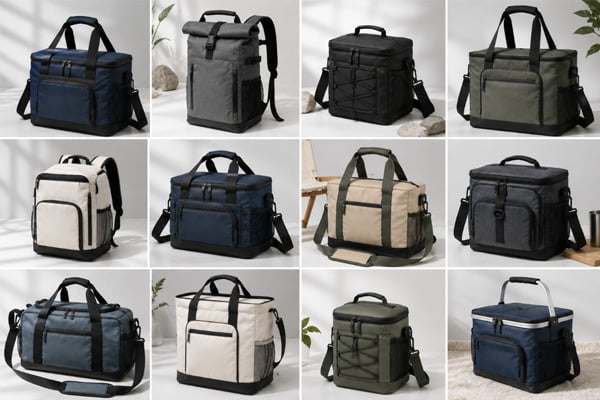
Common Material and Insulation Options:
| Material Type | Features | Best Use Cases |
|---|---|---|
| Oxford Polyester | Durable, tear-resistant fabrics | Outdoor bags and gear |
| PE Foam Insulation | Lightweight, high-performance insulation | Long-lasting temperature retention |
| Aluminum Foil Lining | Thermal conductivity and easy cleaning | Food storage |
| TPU Coated Fabrics | Resistant to spills and stains | High-end bags for premium markets |
What customization options should a reliable manufacturer offer?
When buyers work with a custom cooler bag manufacturer, it’s essential to ensure they support both functional and branding customization.
Reliable suppliers should offer design flexibility, including custom logos, colors, pocket styles, zippers, straps, insulation thickness, and retail-ready packaging.
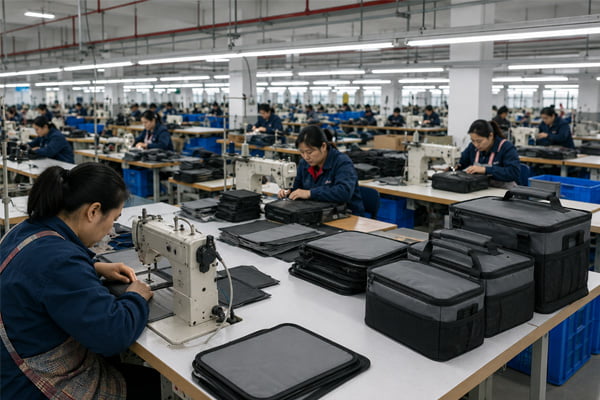
Popular Customization Options:
- Logo printing: Heat transfer, silk screen, or embroidery.
- Materials: Various fabric weights and coatings for functionality.
- Colors and dimensions: Tailored to your audience preferences.
- Packaging: Retail-ready designs for easier distribution.
- Special features: Leakproof liners, extra compartments, and adjustable straps.
What is a reasonable MOQ for custom insulated cooler bags?
Many buyers find Minimum Order Quantity (MOQ) requirements challenging, especially during initial sourcing or test orders. However, MOQ often reflects factory sustainability.
State your estimated order quantity, material specifications and delivery requirements when requesting a quotation.8 Confirm the MOQ for your design with the supplier rather than relying on a universal quantity range.

Experienced suppliers often offer flexibility for large-scale orders or committed partnerships. Discuss MOQ adjustments during negotiations.9
How do you verify quality control and factory certifications?
Quality control guarantees consistent products, while certifications confirm compliance with industry standards. Neglecting these areas can lead to defects or legal issues.
Request documented QC procedures and check any ISO 9001 certificate’s scope and validity10. Quality management certification does not replace inspection of your product. Review social-compliance audit reports separately when required by your customer.
Questions to Ask Manufacturers:
- What are your material and product testing processes?
- Do you provide regular quality checks during production?
- Which international certifications does your factory hold?
- Can I schedule a factory visit or virtual tour?
What affects custom cooler bag pricing?
Several factors impact custom cooler bag pricing, from materials to labor costs. Understanding these can help you plan an accurate budget.
Pricing depends on fabric type, insulation layers, bag complexity, order size, and geographical location. A detailed supplier quote breakdown is essential for transparency.
Typical Cost Breakdown:
| Price Component | Impact on Cost |
|---|---|
| Durable Materials | Higher-grade fabrics increase price |
| Custom Branding | Logo printing requires setup fees |
| Insulation Performance | Multiple layers add thermal efficiency |
| Production Complexity | Unique designs raise labor costs |
What should you confirm before requesting a sample or quotation?
Requesting samples and quotations is critical before committing to bulk orders, but preparation matters.
Confirm product specs, MOQ, lead times, and agreed packaging details before sample or quote requests to prevent confusion.
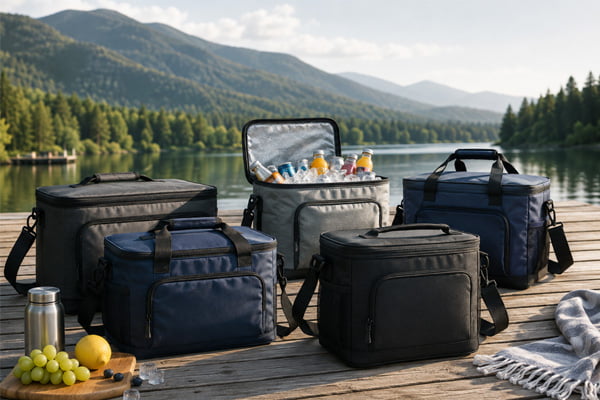
Pre-Sample Validation Checklist:
- Full product specifications.
- Branding customization scope.
- Price breakdown.
- Delivery timelines and logistics.
Frequently Asked Questions
Why is insulation thickness important when sourcing cooler bags?
Evaluate insulation material and thickness together11. Agree on the bag construction and verify the finished bag’s thermal performance under the conditions relevant to your use.
Can I request retail-ready packaging designs for custom cooler bags?
Yes, most manufacturers specializing in OEM/ODM cooler bags offer packaging design services for distribution or retail purposes.
How long does production typically take for insulated cooler bags?
Production timelines range from 20–45 days depending on customization scope, order size, and factory workload.12 Confirm lead times during negotiations.
Conclusion
Choosing the ideal custom insulated cooler bag manufacturer requires evaluating their production capabilities, materials expertise, customization options, MOQ flexibility, and quality control measures. Partnering with a reliable supplier ensures high-quality, brand-specific bags delivered on schedule.
Explore Storivae’s OEM/ODM solutions for custom insulated cooler bags tailored to your needs. Contact us today to discuss your requirements and request samples or pricing.
References
“Navigating Market Challenges of B2B Industrial Manufacturers – Salsify”, https://www.salsify.com/blog/navigating-market-challenges-b2b-industrial-manufacturers. A study on B2B procurement challenges highlights supplier reliability, communication barriers, and limited customization as common issues faced by buyers. Evidence role: general_support; source type: research. Supports: The challenges B2B buyers face with unreliable suppliers, poor communication, and limited customization capabilities.. Scope note: The study may focus on specific industries and not universally apply to all B2B sectors.
↩“OEM vs ODM Manufacturing: Key Differences Explained”, https://importivity.com/blog/oem-vs-odm-manufacturing/. Industry reports on manufacturing partnerships emphasize the need for stable production, quality assurance, and effective communication for successful collaborations. Evidence role: expert_consensus; source type: research. Supports: The importance of stable production, quality standards, communication, and partnership potential in selecting a manufacturer.. Scope note: The findings may vary depending on the specific manufacturing sector.
↩“The Importance of Corporate Reputation for Sustainable Supply …”, https://pmc.ncbi.nlm.nih.gov/articles/PMC9559133/. Research on manufacturing best practices identifies reputation, transparent processes, and scalable production as key indicators of reliability. Evidence role: expert_consensus; source type: research. Supports: The characteristics of reliable manufacturers, including reputation, transparency, and scalability.. Scope note: The findings may not apply to all manufacturing industries.
↩“MOQ: What is it and what are its advantages?”, https://www.ar-racking.com/us/blog/moq-what-is-it-and-what-are-its-advantages/. Studies on B2B manufacturing highlight that flexible MOQ terms help manufacturers cater to diverse client needs and order sizes. Evidence role: general_support; source type: research. Supports: The importance of flexible MOQ terms for accommodating different scales of operation.. Scope note: The benefits of MOQ flexibility may depend on the specific industry and market conditions.
↩“SUPPLIER ASSESSMENT PROCESS FOR … – SOAR”, https://soar.wichita.edu/bitstreams/b40660d4-4f44-4abb-88a7-3e169237c285/download. Educational resources on supplier evaluation recommend assessing factory size, machinery, and worker expertise to ensure production reliability. Evidence role: general_support; source type: education. Supports: The criteria for evaluating manufacturing capabilities, including factory size, machinery, and worker expertise.. Scope note: The recommendations may not account for all industry-specific requirements.
↩Colorado Mountain College — Outdoor Soft Goods Programs. The college describes technical training in sewing, design and fabrication. This supports assessing relevant skills; it does not guarantee any factory’s stitching quality.
↩“What materials can be used to make an insulated bag? – Facebook”, https://www.facebook.com/groups/291023511046957/posts/3251417988340813/. Research on insulated bag materials highlights the durability of Oxford fabric, thermal properties of aluminum foil, and insulation efficiency of PE foam. Evidence role: mechanism; source type: research. Supports: The suitability of polyester, Oxford fabric, aluminum foil lining, and PE foam for cooler bags.. Scope note: The findings may focus on specific use cases and not cover all potential applications.
↩“MEPNN Supplier Scouting Opportunity Synopsis”, National Institute of Standards and Technology (NIST). The form collects technical specifications, business volume, target price, delivery and packaging requirements, and supporting documents. Evidence role: procurement checklist; source type: government guidance. Supports: the information buyers should define when discussing a supply opportunity. Scope note: This U.S. supplier-scouting form does not establish MOQ figures for cooler bags or guarantee a supplier’s trial-order terms.
↩“How do you negotiate MOQs with suppliers? They are …”, https://www.reddit.com/r/Entrepreneur/comments/1e9r7mf/how_do_you_negotiate_moqs_with_suppliers_they_are/. Guides on supplier negotiations suggest that MOQ terms are often flexible and can be adjusted based on buyer requirements and long-term partnerships. Evidence role: general_support; source type: education. Supports: The possibility of negotiating MOQ adjustments with manufacturers.. Scope note: The success of MOQ negotiations may vary depending on the supplier’s policies and production capacity.
↩ISO — ISO 9000 family: Quality management. ISO explains quality management systems and their process and improvement principles. A supplier’s certificate scope and validity must be checked separately; this source is not evidence that Storivae holds certification.
↩U.S. Department of Energy — Insulation and Air-Sealing Essentials. The Department of Energy explains that thermal resistance depends on insulation type and thickness. This is a general insulation principle, not a cooler-bag cooling-duration test.
↩“Why Focusing on Lead Time, Not Just Efficiency and Cost …”, https://interpro.wisc.edu/lead-time-drives-manufacturing-success/. Manufacturing industry reports indicate that production timelines for customized products often range from 20 to 45 days, depending on order complexity and factory capacity. Evidence role: statistic; source type: research. Supports: The typical production timelines for custom insulated cooler bags and factors influencing them.. Scope note: The timelines may vary based on regional manufacturing practices.
↩